

The Tush Push: Is It the NFL’s Future or a Passing Fad?
Jason Kelce, the revered Eagles legend, is on a mission to save the controversial “tush push” play. But will the NFL’s powerbrokers allow such a game-altering tactic to survive? Or is this just the beginning of a greater battle for control of the game’s future?
 Kirsten CollinsMay 21, 20253 Mins read50
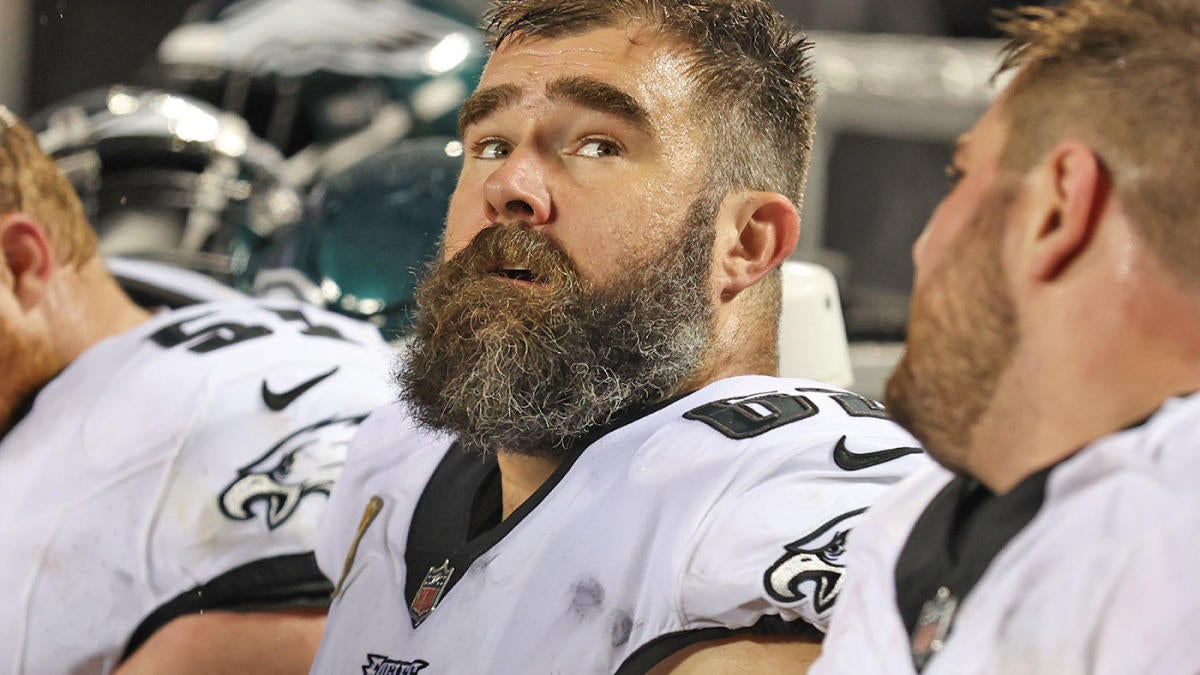
It started as a simple, almost invisible tactic—a play so unremarkable in its inception that it was barely noticed. Now, the “tush push” has become one of the most divisive and controversial maneuvers in NFL history. Jason Kelce, the Eagles’ indomitable center, is fighting tooth and nail to preserve it, facing off against an NFL establishment that seems hell-bent on eradicating it. But is this simply the death of one play, or is it the beginning of a larger war about what the future of the NFL should look like?
The Play That Split a League
A quarterback sneak, buttressed by a trio of linemen pushing from behind—a tactic so mundane on paper, yet so revolutionary in its execution. The Eagles, led by Kelce and the vision of their head coach, Nick Sirianni, have perfected the play, making it a near-guaranteed success. But with success comes scrutiny, and with scrutiny, backlash. Critics argue it’s too powerful, a cheat code that goes against the spirit of the game, while defenders claim it’s just smart football—an evolution of strategy rather than a violation of integrity.
Kelce, ever the spokesperson for his team, has spent the last few weeks in a flurry of meetings, engaging with NFL owners in a desperate attempt to save the play. Why? Because he knows this isn’t just about one tactic—it’s about control. The NFL’s heart has always been about power dynamics, and this little play might just be a microcosm of the much larger battle for influence in the league.
The Future of Football at Stake?
As Kelce navigates the corridors of NFL power, it’s easy to get caught up in the immediacy of this one play. But the real question is this: what does it mean when one innovation is on the brink of being banned simply because it challenges the status quo? Could this be the first step in a series of purges, where old-school strategies are discarded in favor of more ‘marketable’ or ‘exciting’ football? The NFL is already struggling with the balance between nostalgia and progression, and the tush push presents an existential dilemma. What happens when a play becomes too effective, too tactical, for the league’s liking?
“Every time we’ve run it, it’s worked,” Kelce recently remarked, standing firm in the face of mounting opposition. But perhaps the real question isn’t whether the play works—it’s why it’s worked for so long, unnoticed, until now. In a league obsessed with ratings, innovation, and maintaining a razor-sharp competitive edge, could it be that the tush push is seen as a reminder that football still has room for subtlety, strategy, and the rawness of hard-nosed play?
A Reckoning for the NFL’s Identity
If the NFL decides to outlaw the tush push, what does it say about where the league’s priorities lie? The league is at a crossroads, balancing its deep history with the future of its brand—one that’s becoming more about entertainment than the sport itself. The next generation of players may be more athletic, more dynamic, but will they understand the art of playing smart football, or will they be trained to perform on command for the cameras, driven by spectacle rather than substance?
The battle over the tush push could mark the beginning of a larger trend. What’s next—will the NFL get rid of the pocket pass, because it’s “too old-fashioned”? Will they legislate away power-running plays because they aren’t “sexy” enough for the highlight reels? The NFL has always prided itself on pushing boundaries—but it seems the question now is: which boundaries are the league willing to push? And which will they protect at all costs?
The tussle over the tush push, in the end, might not be about one play, but a broader confrontation about the NFL’s soul. Will the league evolve, or will it reject anything that threatens its carefully curated, broadcast-friendly image? As Kelce fights to preserve the play that has become a symbol of Eagles’ dominance, the true battle might be over something much deeper. Football, at its core, is a game of risk, strategy, and raw human will. The question is, when will the NFL lose sight of that?




Barcelona’s Fragile Pursuit: When Injuries Threaten More Than Just a Season
A silence spreads over Camp Nou that no roar can drown out—two...
 Chris Marks2 Mins read
William Saliba: Arsenal’s Silent Architect or Its Greatest Gamble?
The air inside the Emirates shifts with unspoken tension—William Saliba, once a...
 Joseph Bennett2 Mins read
Joel Embiid’s Quiet Confidence: Is the 76ers’ Giant Ready to Rewrite His Story?
Joel Embiid is rarely one to make noise without purpose, and now,...
Kirsten Collins1 Mins read
Juventus, Atalanta, and Arsenal’s Quiet Revolution: What’s Really Shaping This Week in Football?
The roar of Serie A stadiums masks a subtle shift, one that...
Kirsten Collins2 Mins read





Leave a comment