

The Little Mamba’s Pitch: Bianka Bryant Throws Legacy Across the Diamond
At a Dodgers game honoring Kobe Bryant, seven-year-old Bianka Bryant delivered a ceremonial first pitch with poise that transcended sport—raising questions about legacy, grief, and the way a child becomes a symbol of enduring love.
 Krista FreelandAugust 9, 20251 Mins read16
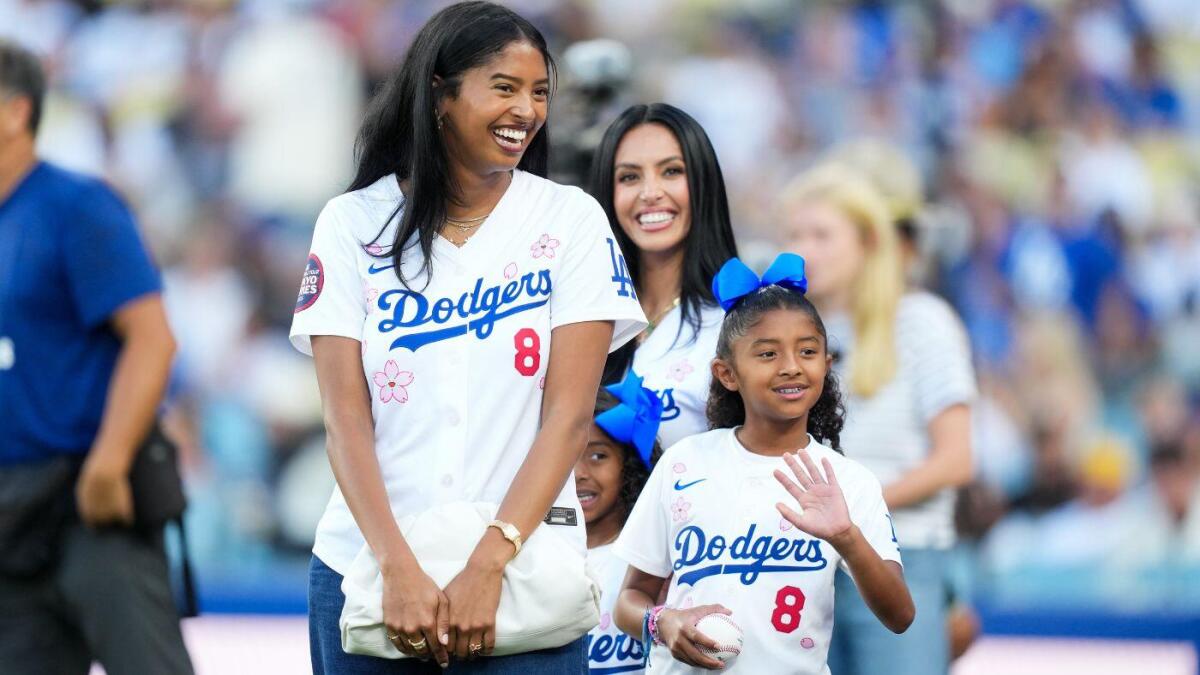
She stepped onto the mound like a silent echo of grace, cable-knit determination in her eyes as she winded up and propelled her father’s spirit toward the plate. Bianka Bryant’s first pitch at Dodger Stadium wasn’t just a ceremonial moment—it was the beating heart of a legacy, alive in a child’s arm.
In that brief arc, something shifted: grief yielded to presence, loss to quiet resilience. The crowd watched—not a star athlete on her first try, but a girl embodying memory made visible.
When A Ball Becomes a Beacon
It wasn’t the speed that moved people—it was the stillness. Bianka’s pitch connected in a smooth one-hopper into the glove of Freddie Freeman, garnering cheers not for athletic feat, but for emotional clarity. She stood beside her mother, Vanessa, and sisters, Natalia and Capri, all wearing jerseys numbered 24, honoring the legend who once dominated both the court and the city’s soul. Vanessa’s Instagram later reflected that L.A. Love, thanking the Dodgers for supporting the Mamba & Mambacita Sports Foundation.
This was not a performance—it was a transmission.
Legacy Worn Like a Jersey
In the stands, fans with limited-edition Kobe bobbleheads saw more than memorabilia—they saw continuity. The night, curated around August 8 in tribute to Kobe’s No. 8 jersey, illustrated a city’s co-authorship in grief and memory. Bianka perched between past and future, charged with a role more profound than pronouncement. In her throw, she invited us to reconsider what legacy means when it is lived more than preached.
She threw the pitch, but the heart of the moment wasn’t in the motion—it was in the silence it filled. The mound ceased to be dirt; it became an altar. And the question lingers: when grief is no longer whispered, but pitched, how do we catch what remains?





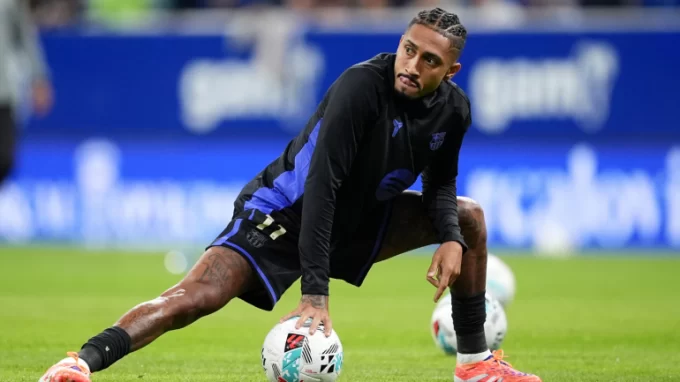
Barcelona’s Fragile Pursuit: When Injuries Threaten More Than Just a Season
A silence spreads over Camp Nou that no roar can drown out—two...
 Chris Marks2 Mins read
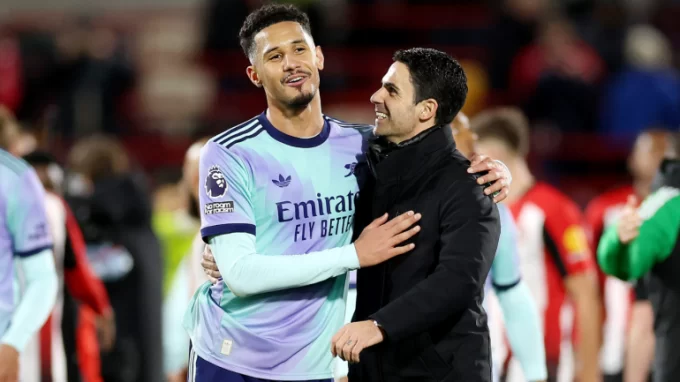
William Saliba: Arsenal’s Silent Architect or Its Greatest Gamble?
The air inside the Emirates shifts with unspoken tension—William Saliba, once a...
 Joseph Bennett2 Mins read
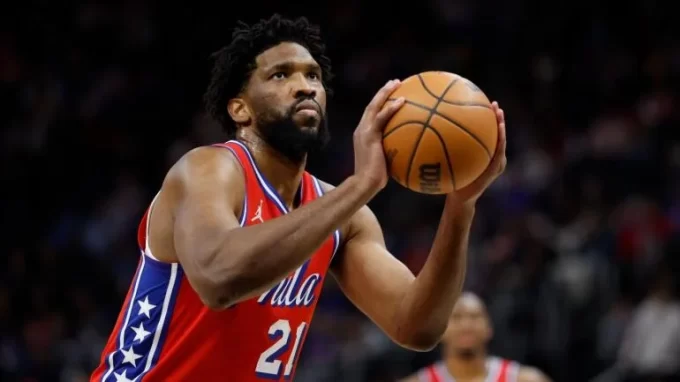
Joel Embiid’s Quiet Confidence: Is the 76ers’ Giant Ready to Rewrite His Story?
Joel Embiid is rarely one to make noise without purpose, and now,...
 Kirsten Collins1 Mins read
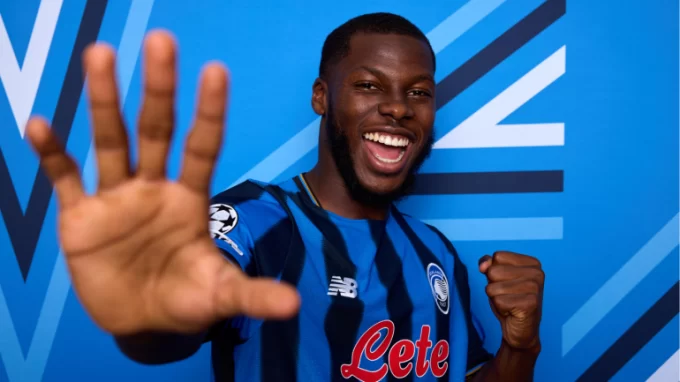
Juventus, Atalanta, and Arsenal’s Quiet Revolution: What’s Really Shaping This Week in Football?
The roar of Serie A stadiums masks a subtle shift, one that...
Kirsten Collins2 Mins read





Leave a comment